UNCONTROLLED gMG

Uncovering the hidden burden of uncontrolled gMG

Actor Portrayals

gMG is chronic and unpredictable1

Patients may experience fluctuating muscle weakness and fatigue that can worsen with activity and improve with rest1-3

Additional symptoms of gMG:3

  • Ptosis
  • Diplopia
  • Dysphagia
  • Dysarthria
  • Proximal muscle weakness
  • Dropped head syndrome
  • Respiratory muscle weakness

Life with gMG is not a journey; it is an odyssey. You never know what is going to come up and throw you off your goals.

- Patient living with gMG for 18 years

Measuring gMG symptoms

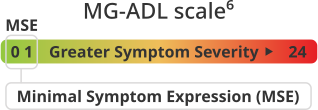
The Myasthenia Gravis Activities of Daily Living (MG-ADL) scale is used to measure gMG symptoms. Ranging from 0 to 24, the MG-ADL scale shows the impact of gMG on daily activities. Lower scores mean less impairment in the patient.4

Measures include:5

  • Talking
  • Chewing
  • Swallowing
  • Breathing
  • Brushing teeth and/ or combing hair
  • Rising from a chair
  • Diplopia
  • Eyelid droop

MG-ADL scale graphic.

MSE is defined as an MG-ADL score of 0 or 1 and is useful in measuring treatment effectiveness.4

MG-ADL scale graphic.

MSE is defined as an MG-ADL score of 0 or 1 and is useful in measuring treatment effectiveness.4

In recent years, MSE has become a treatment goal for patients with gMG.7

Give your patients a tool to help them track their gMG symptoms.

Conventional therapies may not completely alleviate symptoms or function loss in all patients with generalized myasthenia gravis (gMG).1

~50%

of patients with gMG experience moderate-to-severe symptoms that limit their activities of daily living despite treatment with conventional therapies.8*

Based on a US-based analysis of 1140 registrants of the Myasthenia Gravis Patient Registry (MGPR), at least 18 years of age with self-reported MG from July 1, 2013 to June 30, 2017.8

Patients may be reluctant to report the true impact of their symptoms due to concerns about switching treatment.9 Understanding how patients adapt may help you build their optimal treatment plan.

A feeling of “fine” demands deeper insight

Probing questions may uncover unmet needs

Your patients may say they are satisfied with their current treatment, but digging deeper may reveal unmet treatment goals.

Lasting Symptoms

Are your patient's symptoms persistent despite current treatment?

Quality of Life

Is your patient still experiencing a significant impact on their daily life?

Previous Management

Has your patient gone through multiple treatments without adequate improvement?

My symptoms are not me. Some days will be good, some days will be bad, but that’s living with the disease.

- Patient living with gMG for 30 years

If you have patients who are experiencing uncontrolled gMG, consider treatment that may address the underlying cause of symptoms.

References:

  1. Bril V, Drużdż A, Grosskreutz J, et al. Safety and efficacy of rozanolixizumab in patients with generalised myasthenia gravis (MycarinG): a randomised, double-blind, placebo-controlled, adaptive phase 3 study. Lancet Neurol. 2023;22(5):383-394. doi:10.1016/S1474-4422(23)00077-7
  2. Jackson K, Parthan A, Lauher-Charest M, et al. Understanding the symptom burden and impact of myasthenia gravis from the patient's perspective: a qualitative study. Neurol Ther. 2023;12(1):107-128. doi:10.1007/s40120-022-00408-x
  3. Trouth AJ, Dabi A, Solieman N, et al. Myasthenia gravis: a review. Autoimmune Dis. 2012;2012:1-10. doi:10.1155/2012/874680
  4. Muppidi S, Silvestri NJ, Tan R, et al. Utilization of MG-ADL in myasthenia gravis clinical research and care. Muscle Nerve. 2022;65(6):630-639. doi:10.1002/mus.27476
  5. MG activities of daily living (MG-ADL) profile. Myasthenia Gravis Foundation of America. 1997. Accessed February 27, 2025. https://myasthenia.org/Portals/0/ADL.pdf
  6. Regnault A, Morel T, de la Loge C, et al. Measuring overall severity of myasthenia gravis (MG): evidence for the added value of the MG Symptoms PRO. Neurol Ther. 2023;12(5):1573-1590. doi:10.1007/s40120-023-00464-x
  7. Uzawa A, Ozawa Y, Yasuda M, et al. Minimal symptom expression achievement over time in generalized myasthenia gravis. Acta Neurol Belg. 2023;123(3):979-982. doi:10.1007/s13760-022-02162-1
  8. Cutter G, Xin H, Aban I, et al. Cross-sectional analysis of the Myasthenia Gravis Patient Registry: disability and treatment. Muscle Nerve. 2019;60(6):707-715. doi:10.1002/mus.26695
  9. Law N, Davio K, Blunck M, et al. The lived experience of myasthenia gravis: a patient-led analysis. Neurol Ther. 2021;10(2):1103-1125. doi:10.1007/s40120-021-00285-‍w

IMPORTANT SAFETY INFORMATION FOR RYSTIGGO (rozanolixizumab-noli)

RYSTIGGO is associated with important warnings and precautions, including increased risk of infection, drug-induced aseptic meningitis, and hypersensitivity reactions. The most common adverse reactions (≥10%) in patients with gMG are headache, infections, diarrhea, pyrexia, hypersensitivity reactions, and nausea.

IMPORTANT SAFETY INFORMATION INCLUDING BOXED WARNING FOR ZILBRYSQ (zilucoplan)

ZILBRYSQ, a complement inhibitor, increases the risk of serious infections caused by Neisseria meningitidis. Life-threatening and fatal meningococcal infections have occurred in patients treated with complement inhibitors. These infections may become rapidly life-threatening or fatal if not recognized and treated early. Complete or update vaccination for meningococcal bacteria at least 2 weeks prior to the first dose...

IMPORTANT SAFETY INFORMATION INCLUDING BOXED WARNING FOR ZILBRYSQ (zilucoplan) Injection

INDICATION

ZILBRYSQ (zilucoplan) is indicated for the treatment of generalized myasthenia gravis (gMG) in adult patients who are anti-acetylcholine receptor (AChR) antibody positive.

WARNING: SERIOUS MENINGOCOCCAL INFECTIONS

ZILBRYSQ, a complement inhibitor, increases the risk of serious infections caused by Neisseria meningitidis. Life-threatening and fatal meningococcal infections have occurred in patients treated with complement inhibitors. These infections may become rapidly life-threatening or fatal if not recognized and treated early.

  • Complete or update vaccination for meningococcal bacteria (for serogroups A, C, W, Y, and B) at least 2 weeks prior to the first dose of ZILBRYSQ, unless the risks of delaying therapy outweigh the risk of developing a serious infection. Comply with the most current Advisory Committee on Immunization Practices (ACIP) recommendations for vaccination against meningococcal bacteria in patients receiving a complement inhibitor.
  • Patients receiving ZILBRYSQ are at increased risk for invasive disease caused by Neisseria meningitidis, even if they develop antibodies following vaccination. Monitor patients for early signs and symptoms of serious meningococcal infections and evaluate immediately if infection is suspected.

Because of the risk of serious meningococcal infections, ZILBRYSQ is available only through a restricted program under a Risk Evaluation and Mitigation Strategy (REMS) called ZILBRYSQ REMS.

CONTRAINDICATIONS

ZILBRYSQ is contraindicated for initiation in patients with unresolved serious Neisseria meningitidis infection.

WARNINGS AND PRECAUTIONS

Serious Meningococcal Infections

ZILBRYSQ, a complement inhibitor, increases a patient’s susceptibility to serious, life-threatening, or fatal infections caused by meningococcal bacteria (septicemia and/or meningitis) in any serogroup, including non-groupable strains. Life-threatening and fatal meningococcal infections have occurred in both vaccinated and unvaccinated patients treated with complement inhibitors. The initiation of ZILBRYSQ treatment is contraindicated in patients with unresolved serious Neisseria meningitidis infection.

Complete or update meningococcal vaccination (for serogroups A, C, W, Y, and B) at least 2 weeks prior to administration of the first dose of ZILBRYSQ, according to current ACIP recommendations for patients receiving a complement inhibitor.

If urgent ZILBRYSQ therapy is indicated in a patient who is not up to date with meningococcal vaccines according to ACIP recommendations, provide the patient with antibacterial drug prophylaxis and administer meningococcal vaccines as soon as possible.

Closely monitor patients for early signs and symptoms of meningococcal infection and evaluate patients immediately if infection is suspected. Consider interruption of ZILBRYSQ in patients who are undergoing treatment for serious meningococcal infection, depending on the risks of interrupting treatment in the disease being treated.

ZILBRYSQ REMS

Due to the risk of serious meningococcal infections, ZILBRYSQ is available only through a restricted program under a REMS called ZILBRYSQ REMS.

Under the ZILBRYSQ REMS, prescribers must enroll in the program. Prescribers must counsel patients about the risk of serious meningococcal infection, provide the patients with the REMS educational materials, and ensure patients are vaccinated with meningococcal vaccines. Additional information on the REMS requirements is available at www.ZILBRYSQREMS.com or 1-877-414-8353.

Other Infections

Serious infections with Neisseria species (other than Neisseria meningitidis), including disseminated gonococcal infections, have been reported in patients treated with complement inhibitors. ZILBRYSQ blocks terminal complement activation; therefore, patients may have increased susceptibility to infections, especially with encapsulated bacteria, such as infections caused by Neisseria meningitidis but also Streptococcus pneumoniae, Haemophilus influenzae, and to a lesser extent, Neisseria gonorrhoeae. Administer vaccinations for the prevention of Streptococcus pneumoniae infection according to ACIP recommendations. Patients receiving ZILBRYSQ are at increased risk for infections due to these organisms, even if they develop antibodies following vaccination.

Pancreatitis and Other Pancreatic Conditions

Pancreatitis and pancreatic cysts have been reported in patients treated with ZILBRYSQ. Patients should be informed of this risk before starting ZILBRYSQ. Obtain lipase and amylase levels at baseline before starting treatment with ZILBRYSQ. Discontinue ZILBRYSQ in patients with suspected pancreatitis and initiate appropriate management until pancreatitis is ruled out or has resolved.

ADVERSE REACTIONS

In a placebo-controlled study, the most common adverse reactions (reported in at least 10% of gMG patients treated with ZILBRYSQ) were injection site reactions, upper respiratory tract infections, and diarrhea.

Please see the full Prescribing Information.

IMPORTANT SAFETY INFORMATION AND INDICATION FOR RYSTIGGO (rozanolixizumab-noli)

INDICATION

RYSTIGGO (rozanolixizumab-noli) is indicated for the treatment of generalized myasthenia gravis (gMG) in adult patients who are anti-acetylcholine receptor (AChR) or anti-muscle-specific tyrosine kinase (MuSK) antibody positive.

WARNINGS AND PRECAUTIONS

Infections: RYSTIGGO may increase the risk of infection. Delay RYSTIGGO administration in patients with an active infection until the infection is resolved. During treatment with RYSTIGGO, monitor for clinical signs and symptoms of infection. If serious infection occurs, administer appropriate treatment and consider withholding RYSTIGGO until the infection has resolved.

Immunization

Immunization with vaccines during RYSTIGGO treatment has not been studied. The safety of immunization with live or live-attenuated vaccines and the response to immunization with any vaccine are unknown. Because RYSTIGGO causes a reduction in IgG levels, vaccination with live-attenuated or live vaccines is not recommended during treatment with RYSTIGGO. Evaluate the need to administer age-appropriate vaccines according to immunization guidelines before initiation of a new treatment cycle with RYSTIGGO.

Aseptic Meningitis: Serious adverse reactions of aseptic meningitis (also called drug-induced aseptic meningitis) have been reported in patients treated with RYSTIGGO. If symptoms consistent with aseptic meningitis develop, diagnostic workup and treatment should be initiated according to the standard of care.

Hypersensitivity Reactions: Hypersensitivity reactions, including angioedema and rash, were observed in patients treated with RYSTIGGO. Management of hypersensitivity reactions depends on the type and severity of the reaction. Monitor patients during treatment with RYSTIGGO and for 15 minutes after for clinical signs and symptoms of hypersensitivity reactions. If a reaction occurs, institute appropriate measures if needed.

ADVERSE REACTIONS

In a placebo-controlled study, the most common adverse reactions (reported in at least 10% of RYSTIGGO-treated patients) were headache, infections, diarrhea, pyrexia, hypersensitivity reactions, and nausea. Serious infections were reported in 4% of patients treated with RYSTIGGO. Three fatal cases of pneumonia were identified, caused by COVID-19 infection in two patients and an unknown pathogen in one patient. Six cases of infections led to discontinuation of RYSTIGGO.

Please see the full Prescribing Information.

UCB respects your privacy. Click here to manage your email preferences.

For US Healthcare Professionals Only.

RYSTIGGO® and ZILBRYSQ® are registered trademarks of the UCB Group of Companies. All other trademarks and registered trademarks are the property of their respective holders.

©2026 UCB, Inc., Smyrna, GA 30080. All rights reserved.


US-RZ-2500510